
Blog archive
- 2026
- 2018
- 2017
Blog posts tagged with 'pneumatic tires'
1. Are solid tires more expensive than pneumatic?
Ans: They cost more upfront, but they typically deliver a lower total cost of ownership thanks to longer life, no repairs, and far less downtime.
2. Do solid skid steer tires give a rough ride?
Ans: Solid tires ride firmer than air-filled tires, but modern designs use cushioning apertures in the sidewall to absorb shock and smooth out the ride considerably.
3. Can I switch my skid steer from pneumatic to solid tires?
Ans: In most cases, yes. Send us your machine details, and we'll confirm the right solid-tire size and tread for your loader.
4. Not Sure Which Is Right for You?
Ans: Please tell us how and where you run your machine, and we'll recommend the best fit. For most heavy-duty operations, our solid skid steer tires are the smarter long-term investment.
Email: sales@solidtiresandtracks.com |Call: (949)357-4919 today.
Solid Tires and Tracks supplies industrial tires, rubber tracks, and undercarriage parts for loaders, excavators, and forklifts across the construction, agricultural, and recycling industries.
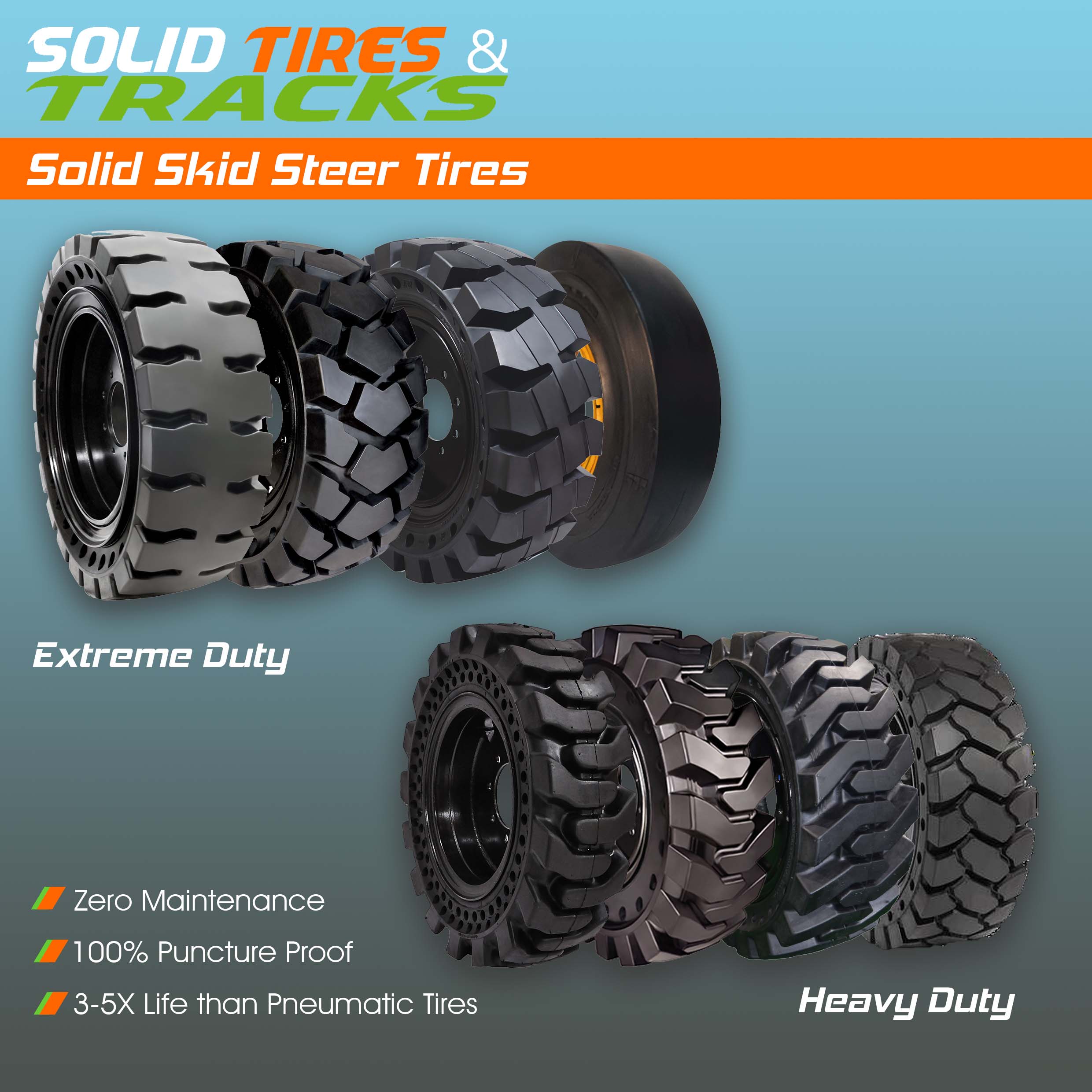
The right skid steer tires affect your uptime, maintenance costs, and bottom line. The choice comes down to two options — and the difference is simple: air.
Pneumatic tires are air-filled, giving a smooth ride but leaving them open to punctures, flats, and blowouts. Solid tires are made entirely from dense rubber, so there's nothing to puncture, and flats are impossible.
|
Factor |
Solid Tires |
Pneumatic Tires |
|
Flats & punctures |
Impossible (no air) |
Vulnerable |
|
Upfront cost |
Higher |
Lower |
|
Lifespan |
Longer |
Shorter |
|
Maintenance |
Virtually none |
Pressure checks & repairs |
|
Ride comfort |
Firmer (cushioned options) |
Smoother |
|
Downtime risk |
Minimal |
Higher |
|
Best for |
Heavy-duty, debris-heavy use |
Smooth surfaces, light use |
Choose pneumatic if your machine works mostly on smooth surfaces, runs occasional jobs, and ride comfort comes first.
Choose solid for demanding, debris-heavy work — construction, demolition, recycling, scrap, and waste handling. If a single flat means real downtime, solid tires protect your schedule and your budget.
The bottom line: pneumatic wins on sticker price, but once you factor in repairs, replacements, and idle hours, solid tires usually win on total cost of ownership.
Not sure which fits your machine? Email: sales@solidtiresandtracks.com |Call: (949)357-4919, and we'll recommend the right tire.