
Blog archive
- 2026
- 2018
- 2017
Blog posts tagged with 'construction tire'
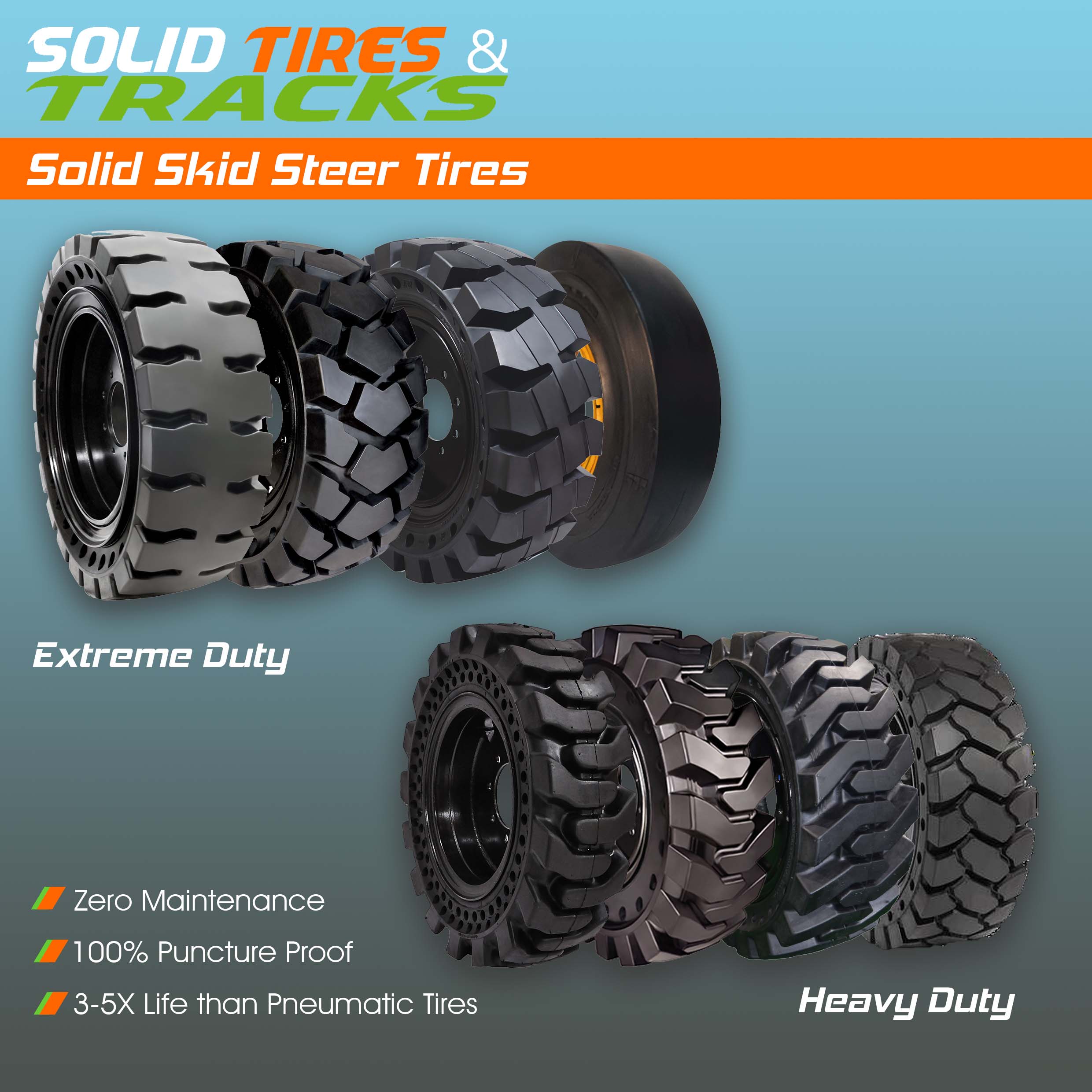
The right skid steer tires affect your uptime, maintenance costs, and bottom line. The choice comes down to two options — and the difference is simple: air.
Pneumatic tires are air-filled, giving a smooth ride but leaving them open to punctures, flats, and blowouts. Solid tires are made entirely from dense rubber, so there's nothing to puncture, and flats are impossible.
|
Factor |
Solid Tires |
Pneumatic Tires |
|
Flats & punctures |
Impossible (no air) |
Vulnerable |
|
Upfront cost |
Higher |
Lower |
|
Lifespan |
Longer |
Shorter |
|
Maintenance |
Virtually none |
Pressure checks & repairs |
|
Ride comfort |
Firmer (cushioned options) |
Smoother |
|
Downtime risk |
Minimal |
Higher |
|
Best for |
Heavy-duty, debris-heavy use |
Smooth surfaces, light use |
Choose pneumatic if your machine works mostly on smooth surfaces, runs occasional jobs, and ride comfort comes first.
Choose solid for demanding, debris-heavy work — construction, demolition, recycling, scrap, and waste handling. If a single flat means real downtime, solid tires protect your schedule and your budget.
The bottom line: pneumatic wins on sticker price, but once you factor in repairs, replacements, and idle hours, solid tires usually win on total cost of ownership.
Not sure which fits your machine? Email: sales@solidtiresandtracks.com |Call: (949)357-4919, and we'll recommend the right tire.